4 Ways Domestic Violence Counseling Changes Lives
- Posted by Sarah Swiston
- On May 1, 2026
- adult counseling, Chicago, chicago metropolitan area, Chicago suburbs, children's counseling, children's counseling domestic violence, community resources, community-based services, Domestic Violence, domestic violence agency chicago, domestic violence agency chicago suburbs, domestic violence organization, domestic violence resource center, DV agency, dv survivors, End Domestic Violence, family dv counseling, family services, Foglia Family Resource Center, mental health, Mental Health Awareness Month, mental health domestic violence, mental health DV, mental illness, non-profit, non-profit agencies, northwest chicago, support grounds dv, support groups, support groups domestic violence, WINGS, WINGS Program
May is Mental Health Awareness Month. Read 4 ways WINGS domestic violence counseling and support groups change lives for adult survivors. Learn what can be done now that this funding is coming to an end.
“Group therapy has been a game-changer for me. I’ve been able to tap into my emotions and speak my truth in a way that’s been super healing. I love that I can see myself in others, and they’re seeing themselves in me too. It’s like we’re all in this together, you know?” – Alicia,* a survivor participating in WINGS domestic violence support group.
A Growing Need
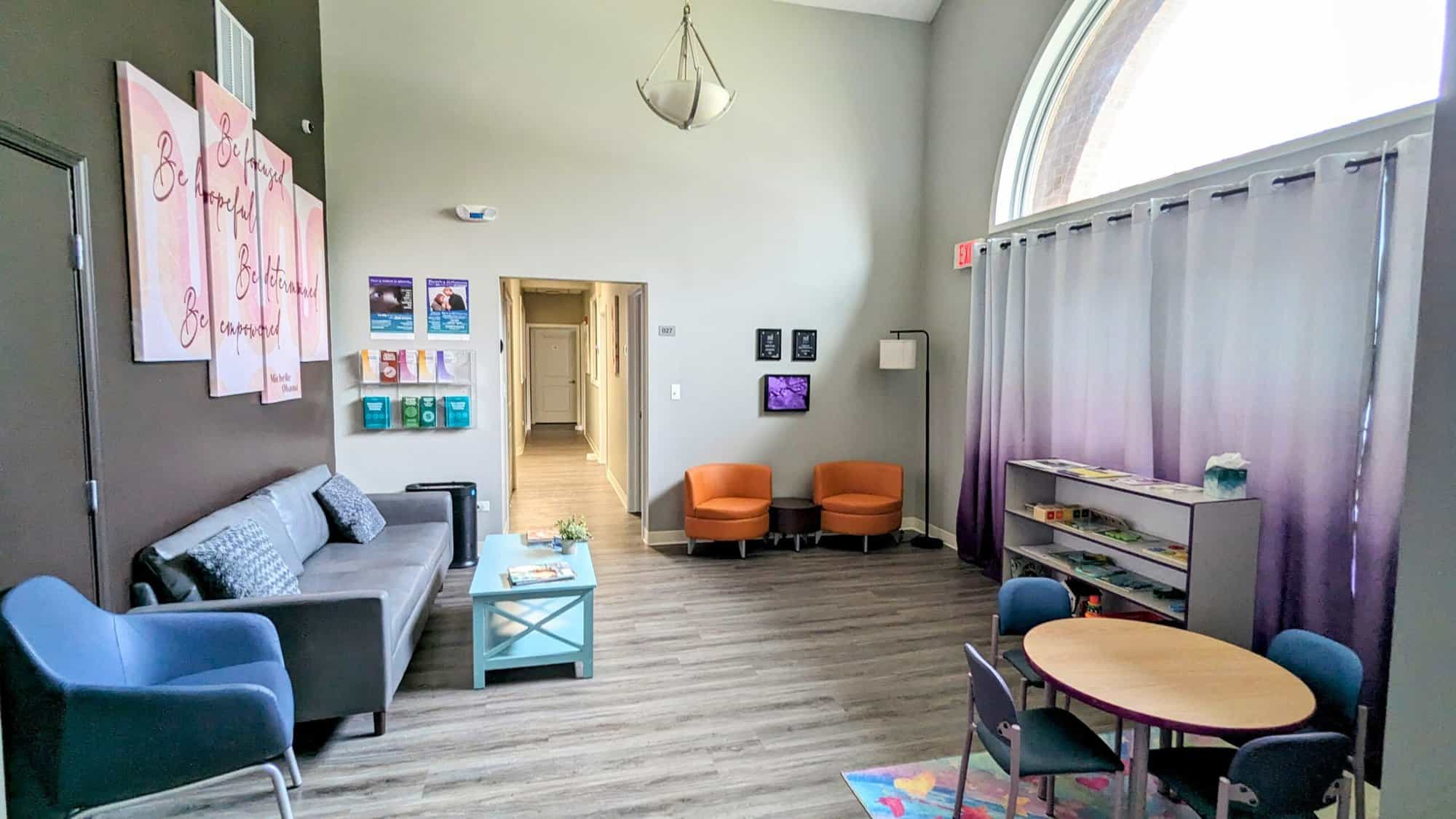 Since WINGS Foglia Family Resource Center opened near the end of 2023, WINGS counseling program has grown rapidly. So far this year, WINGS counseling has served 278 adult clients, a 78% increase over Fiscal Year 2023 numbers.
Part of this increase is related to WINGS receiving a government grant to hire more counselors, including an Assistant Manager of Clinical Services. This new position assists clients and also supervises master level clinical social work interns.
Even after hiring more counselors and utilizing master’s level clinical social work interns, WINGS individual counseling program still has a waitlist capped to 30 clients with an estimated 3-5 month wait. To help meet the need, WINGS also offers domestic violence support groups. These support groups are offered to clients looking for community support regarding domestic violence and clients ending their time with individual counseling.
WINGS also serves child survivors with individual and group counseling. The government grants that fund these newer adult and child counseling positions are set to end at the end of September. Learn 4 ways domestic violence counseling changes lives for adult survivors of domestic violence, hear from client participants, and find ways you can help.
1) Domestic Violence Counseling is Specialized
Families affected by domestic violence often experience complex trauma, anxiety, and depression. Affordable counseling options are scarce.
WINGS counseling programs are free to the survivor and specialized to address domestic violence.
WINGS counselors work with clients to identify immediate risks, emotional triggers, and personalized strategies that support survivors. Whether a survivor is currently experiencing abuse, leaving an abusive relationship, or navigating post-abuse recovery, WINGS counselors educate clients on healthy versus unhealthy relationship dynamics and understanding boundaries.

WINGS Director of Clinical Services, Megan shares, “Domestic violence specific counseling is focused on safety planning. We are now screening for possible strangulations and potential traumatic brain injuries. WINGS has resources to help survivors who have disclosed this information.”
Through education and reflection, survivors begin to recognize patterns, develop self-awareness, and build confidence in setting limits that support their well-being.
One of the major risk factors counselors assess is access to firearms. Megan continues, “If a person who causes harm has access to a firearm, the statistics are quite alarming. We don’t just throw out statistics lightly. Our counselors know when and how to address the topic safely, presenting the information in a way clients can hear, absorb, and act on when appropriate.”
Individual counseling sessions run on a 3-month basis. When the 3 months are coming to an end, counselors assess if the sessions should continue based on the client’s needs and safety risks. Since some clients are in post-abuse recovery, a next step can often be joining a domestic violence support group or getting paired with a Survivor Lifeline mentor.
Sally*, a participant in WINGS domestic violence support group says:
“I have learned so much about changing behavior patterns and I have learned how to recognize warning signs of a bad relationship….
This group has really changed my life and the awareness that I have now could have come from no one else.
I also want to say that Samantha is a great facilitator and brings life-changing topics as well as positive energy and support to the group. I am so grateful I have an opportunity to participate. Thank you!”
2) Domestic Violence Counseling is Collaborative
WINGS counselors work collaboratively with survivors on approaches that feel the most meaningful to the client. These can include expressive arts, journaling, and more.

Some examples of activities in counseling include:
- Empty Chair Exercise – Sam, an Adult Domestic Violence Counselor at WINGS shares, “One technique I use is the empty chair exercise. Clients are invited to speak to a person, version of themselves, or unresolved situation. This allows them to externalize emotions, gain insight, and process experiences in a safe and structured way.”
- Letter Writing – Sam continues, “Recently, I have also been integrating inner child work into sessions…For example, some clients are writing letters to themselves during times they were experiencing abuse, offering the validation, protection, and support they wished they had received. When they read these aloud in sessions, it often becomes a powerful and healing experience.”
- Relatable Examples – Sam explains, “For instance, during his Coachella performance, Justin Bieber shared a video of himself as a child singing and harmonized with his younger self. Clients resonated with this concept, and it helped open conversations about nurturing and supporting their own inner child.”
Alicia,* a survivor participating in WINGS domestic violence support group says:
“Speaking up has been a way for me to reclaim my voice and take back control. I’m not letting the perpetrator define me; I’m defining myself. It’s liberating to take ownership of my story.
I’m proud of the progress I’ve made, and I’m grateful for the support of my group. We’ve created a space where we can be vulnerable and real, and it’s been incredible to see how that vulnerability has strengthened me. My inner critic is pretty quiet these days, and I owe that to this group and the work we’ve done together.
I’m grateful to be in a space where I can be my authentic self, and I’m excited to see how this journey continues to unfold.”
3) Support Groups Create Safe Spaces and Build Community
 WINGS Support Groups facilitated by counselors have continued to grow and attract consistent attendance. WINGS currently runs four support groups and may add more in the future. “We’ve found that the Spanish-speaking group’s attendance is so consistent, it’s almost like they have become family,” Megan shares.
Opal*, a survivor participating in WINGS domestic violence support group, shares:
“I love this group. I love everything this group has to offer. This is my safe space, my healing, and my home.
Sam (WINGS group facilitator) lets us feel heard and understood. It’s brought me peace in learning what I have gone through, how I fell into patterns, and how to cope with moving forward.
Without this group and the bonding I’ve been able to have with the other members, I fear I would have emotionally drowned. But now that I have been blessed to be a part of something beautiful, I’m happy to say it has brought me strength. I no longer fear being alone and misunderstood because I have found my community. More importantly, I have found my family.
This group is something I will carry in my heart for many years to come. I love this group. I am grateful for this group, and I am forever thankful for WINGS.”
4) The Power of Positive Affirmations
 WINGS counselors understand that meaningful change can occur when just one supportive person is consistently present in someone’s life. Sam says, “I strive to be that supportive and stabilizing presence for clients as they navigate healing and growth.”
She continues, “All too often clients have been belittled or told they are not important or worthy. I tell my clients that they are a part of my dream. Seeing them succeed and being able to walk alongside them as the courageous person they are is all part of my dream. It’s always an emotional and powerful moment, and I genuinely mean it. It is important to have positive affirmations to ourselves and others.”
Sam ends her sessions with a quote. Here is one she left us:
“Anything that’s human is mentionable, and anything that is mentionable can be more manageable. When we can talk about our feelings, they become less overwhelming, less upsetting, and less scary.”
― Fred Rogers, You Are Special: Words of Wisdom from America’s Most Beloved Neighbor, 1994
Ways You Can Help Survivors
Donate:
Critical government funding for a portion of WINGS community counseling program is set to end at the end of September, all while we have seen the waitlist remain full and the support groups continue to grow.
Your donation helps survivors of domestic violence have a safe place to heal, reclaim their voice, and hear that they are worthy of achieving their dreams. By donating today, you are showing survivors that they are not alone in their journey.
Volunteer:
Volunteers are crucial to WINGS mission. You can make an impact: become a mentor, sort donations, assist at WINGS Resale, serve on our board of directors, and more.
“Joining WINGS has been one of the best choices I’ve made during my healing journey as a survivor.
I feel as though I’ve built a community of people who understand the trauma I endured, and they are there to offer support.
Prior to joining WINGS, I felt completely alone and I lacked support from my friends and family.
Now every week I look forward to sharing my experiences in group and also listening to my peers and offering the support they need.”
~ Naomi*, a survivor participating in WINGS domestic violence support group
*WINGS uses representative names and photos to protect the dignity and security of those we serve.