Domestic Violence in LGBTQIA+ Relationships: Myths, Similarities, and Ways to be Supportive
- Posted by Sarah Swiston
- On June 1, 2026
- Chicago, chicago metropolitan area, Chicago suburbs, Domestic Violence, domestic violence agency, domestic violence organization, DV agency, DV in LGBTQIA+ Relationships, dv survivors, End Domestic Violence, LGBTQ Domestic violence, LGBTQ DV similarities, LGBTQ myths, LGBTQ relationships, LGBTQ Survivors, LGBTQIA domestic violence, LGBTQIA DV similarities, LGBTQIA DV survivors, LGBTQIA relationship myths, LGBTQIA survivors, northwest chicago, Ways to Advocate for LGBTQ, Ways to help LGBTQIA, ways to help LGBTQIA DV survivors, WINGS, WINGS Program
Domestic violence occurs across all genders, sexual orientations, socioeconomic levels, cultures, and religions. Due to marginalization, LGBTQIA+ individuals are vulnerable to domestic violence. As June is Pride month, WINGS highlights domestic violence in LGBTQIA+ relationships: myths, similarities, and ways to be supportive.
WINGS provides a supportive environment to all survivors regardless of their gender identity, expression, or sexual orientation.
WINGS Safe Houses can accommodate LGBTQIA+ survivors. We partner with local agencies that provide group therapy and programming for the LGBTQIA+ community.
Myths about Domestic Violence in LGBTQIA+ Relationships
Myth: Domestic violence is less common in same-sex relationships.
Research shows the LGBTQIA+ members have experienced domestic violence at equal or even higher rates compared to heterosexual couples.
Studies have found that domestic violence affects:
However, these numbers are likely higher as many incidents go unreported.
Myth: It is easier for lesbian or gay survivors of domestic violence to leave the abuser than it is for heterosexual women.
LGBTQIA+ survivors have different barriers to services than heterosexual relationships that make leaving an abusive relationship just as challenging.

Maliena B, WINGS Children’s Advocate
“It is important to acknowledge the explicit affects one within the LGBTQIA+ community may experience due to domestic violence.” Maliena Boone, WINGS Children’s Advocate shares and continues, “LGBTQIA+ individuals are less likely to seek help, believe that they will be helped, or be believed in general.”
Although isolation is used as a method to maintain power and control by abusers in heterosexual relationships, LGBTQIA+ survivors often have less support from family, friends, religious institutions, and society. They may feel isolation from an already smaller community.
For LGBTQIA+ survivors, reaching out for help can be especially difficult. Many fear continued victimization from law enforcement, criminal justice system, and social services workers. Programs and resources may not be readily available. In a study of male same sex relationships, only 26% of men called the police after experiencing near-lethal violence.
Some may face challenges or experience fear in obtaining an order of protection. In a study, fewer than five percent of LGBTQIA+ survivors of domestic violence sought orders of protection.
Threats may look different in LGTBQ relationships, the perpetrator may threaten to “out” their partner or disclose a private HIV/AIDS status. Some couples with children may fear their children might be taken away.
Universal Similarities of Domestic Violence
 Both heterosexual and LGBTQIA+ relationships often follow the cycle of violence including phases like tension building, explosion, and honeymoon.
- Abusers may use isolation, intimidation, and other similar tactics to make the survivor feel powerless.
- View the Heterosexual Power and Control Wheel
- View the LGBTQIA+ Power and Control Wheel
- The abuse can be verbal, emotional, sexual, psychological, physical and financial
- Leaving the abuser is a challenging and dangerous process
- No one deserves to be abused
Ways to Be Supportive to an LGBTQIA+ Survivor
In addition to staying clear of these harmful responses, here are some additional considerations to support LGBTQIA+ survivors.
 Be Inclusive and Empowering:
- Ask for and use pronouns
- Use the term “partner” instead of assuming that the individual has a boyfriend, girlfriend, husband, wife, etc.
- Allow individuals to define their own sexual orientation, gender identity and come out when they are ready
- Advocate:
- Bring attention to the issue of LGBTQIA+ domestic violence
- Stand against homophobia and transphobia as oppression and a form of violence. Speak up when you hear anti-LGBTQIA+ slurs, jokes, or misinformation.
- Champion policies at local, city, state and federal levels
- Continue to Learn:
- Ask questions and read more.
- Click here for some terms regarding LGBTQIA+ issues.
WINGS is Here to Help
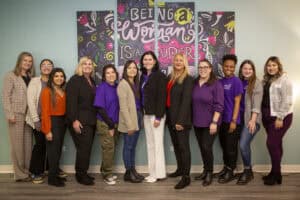 “Queer history shows us that support is often found within the cracks of the system and under the radar. We at WINGS strive to help fill those cracks with hope, empathy, compassion, equality and inclusion for all,” Maliena shares.
WINGS programs welcomes survivors from the LGBTQIA+ community throughout our programs: Safe Houses, Housing Programs, Counseling, and more. Learn more here.
Connect with Us
You can help bring about powerful change for survivors by donating funds, collecting needed WINGS Pantry items, volunteering your time, and more.
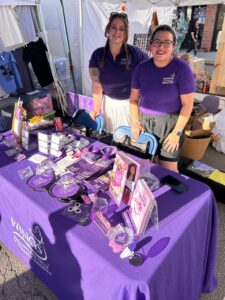
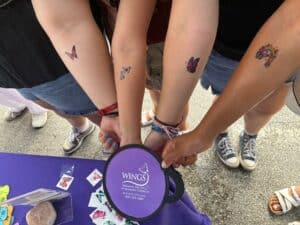
This year WINGS attended Midsommarfest in Andersonville June 12th-June 14th and had a great time meeting community members.
Additional Resources for LGBTQIA+ Survivors:
- 24-Hour Domestic Violence Hotline: 847-221-5680
- WINGS Counseling and Mentoring line: 847-519-7828
- The Network/La Red (Bilingual/Spanish) – 800-832-1901
- FORGE (trans and gender nonconforming) – 414-559-2123
- GLBT National Youth Talkline: 800-246-PRIDE (7743)
- Howard Brown Health Center – Violence Recovery Project – 773-388-8882
- The Center on Halsted – Anti-Violence Project – 773-871-CARE (2273) or AVP@centeronhalsted.org